
Digression: That is not a toaster.
Offer a Chilean a modern slot toaster and watch their face. A short digression on how a piece of history survived the modern world at the end of the earth.

Here goes another of those uncontrolling digressions. A space I created for those stray thoughts that drift away from my usual writing, wandering into a different territory. Like “Berlines” in another post.
There's a curious object I've watched since I was a child, resting over the flame in nearly every Chilean kitchen: a little device for burning bread.
Sorry — for toasting bread. Though if you're not paying attention, it's very much the first one.
Last week we had breakfast together, and I told you about this object. It's an emblem in Chile, loved by young and old alike.
The Chilean toaster is a flat, light metal rack that sits directly over the open flame. It has small holes across its surface to let the heat through, a few rods to hold whatever you place on top, and it's finished with a wooden handle that protects your hands. This is fire, bread, and nothing in between.


You learn the ritual early. You don't toast a Chilean bread whole: first you split it in half. The outer crust, the one that came golden from the oven, is sacred, and it stays exactly as it is. It's the crumb, the soft inside, that you lay face-down over the flame.
To toast it evenly, we turn it with our fingertips, half a second before the heat reaches the skin. You burn yourself once and never forget the rhythm. And though tongs exist, we still use our fingers. Maybe that's the raw charm of the thing.
If you get distracted, the bread comes out black — at which point the lazy among us simply scrape it with a knife and eat it anyway. No shame, no waste.
We call it simply toaster — not "bread toaster" — because toasting is only its first trade.
The second is rice. To make it graneado — every grain loose, firm, and whole, never mushy or burst open — you first sauté it, add the water, and when it evaporates, you lower the flame and slide the toaster under a wide pot. The heat arrives soft then, even, indirect, and the rice cooks slowly until it's perfect — the toaster's quiet second miracle.
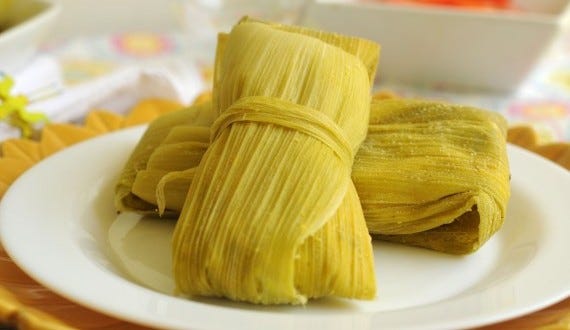
We also use it to warm up humitas:
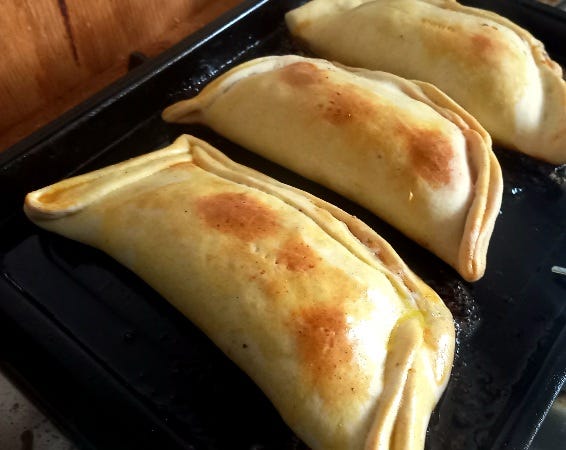
Empanadas:
Or anything that gets better with the touch of direct fire.
For most of my life, I believed this was ours alone. A small Chilean genius, born at the end of the world. Until the other day, when I learned the French have one and call it a grille-pain, and the Italians do too, and call it a brustolina.
But here's the mystery of my little investigation: some Italians and French, in comments I read, said they had never seen one in their lives.
Which makes me think the rest of the world moved on to the electric model, while Chile stayed behind, faithfully worshipping a piece of history. We still make them. We still use them every single day.
And maybe with good reason. Because try offering a Chilean one of those sleek electric toasters with the slots, and watch their face. "That doesn't toast bread," they'll tell you. And they're right. Have you seen Chilean bread?
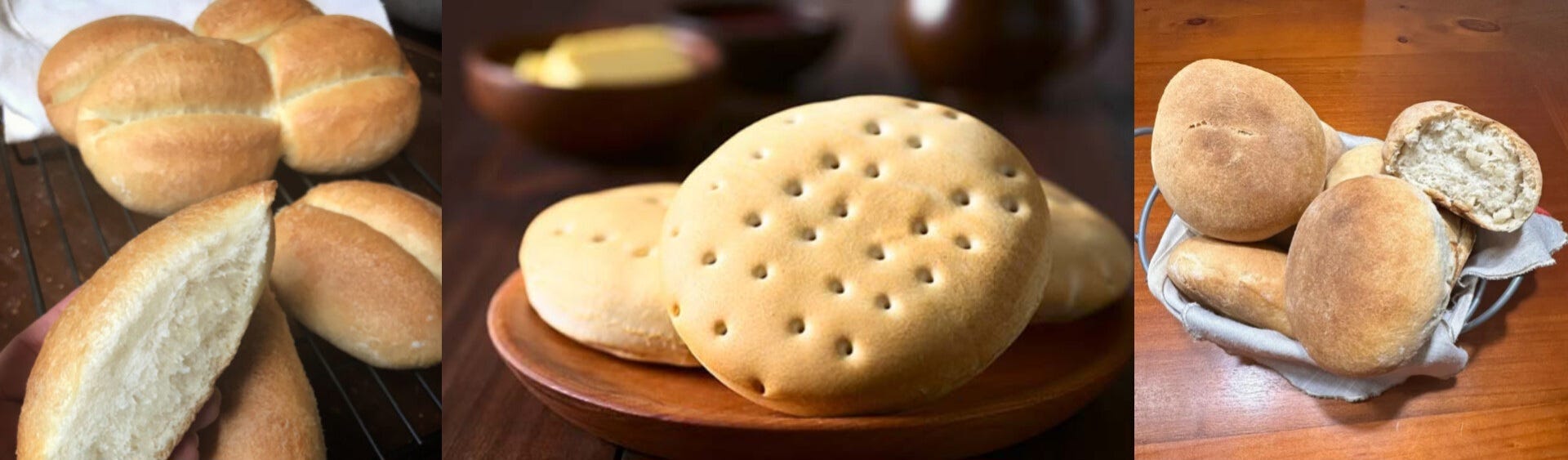
The marraqueta is chubby, plump; how is that supposed to fit into a flat slot? The hallulla is round, leaves a whole crescent moon sticking out, cold and untoasted. And the pan amasado is roughly as wide as both slots put together. This is not bread you slice; you eat it just as it came from the oven.
I once toasted an electric toaster to a short circuit, trying to force Chilean bread into it. I suspect selling electric toasters in Chile must be one of the worst businesses in the country.
But selling our little rack of fire to the rest of the world? Now that could be something.
If I had to describe, from the soul, this marvelous generator of toasted-bread scent that I wake up to almost every morning, it would have to be with poetry. Yes — with an Ode.
If the Chilean poet Pablo Neruda wrote an Ode to the Onion, why not write one to the Chilean toaster? Though the only thing I share with him is having been born in the same corner of the world.
Ode to the Chilean Toaster
To you, humble disc of tin,
constellation punched out by anonymous hands,
I sing today,
faithful sentinel of cold mornings.
You don’t seek the proud gleam of steel,
nor the precise tick-tock of the modern machine.
Your true vestment is another:
a mantle of soot, burnt violets, and matte black.
The noble patina of time and shared grease.
You are the wise mediator of the kitchen.
Below, the flame roars, impatient and fierce,
ready to scorch without mercy.
But you stand between, a noble shield;
you take the burning blow at your center
and scatter it sideways, with care,
spreading an even tide of heat.
Through your many little eyes of metal,
you let pass only the right brush of the living flame,
which leaves on the hallulla or the marraqueta
those black, charred crests,
where the sacred flavor of smoke hides.
Oh, guardian of slow rhythms!
You always end up with a crooked handle,
a loose wire,
old, sooty, scraped by fingers.
But when you settle over the stove’s grate,
the whole house becomes a temple.
You give us the mystical scent of toasted flour,
that smell that erases any distance
and sits us all down,
around your warmth,
at the same table.
And we have it in Argentina! Probably not a surprise, as it’s your neighboring country! I’ve seen this gem in my grandparents’ & mother’s homes in Buenos Aires; it’s so evocative for me too.
I love reading your writing. I’m now in NYC but I can revisit your stunning part of the world through your writing. 🇨🇱🇦🇷
Love this, learned something new too!